
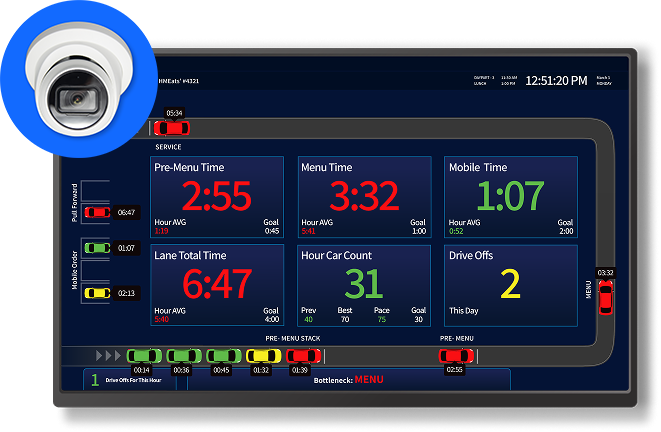
The Hidden Minutes: Uncovering Drive-Thru Blind Spots
The waits before the menu board, after the window, in mobile spots, and in the lane, where no scorecard is looking.
Speed alone has never told the whole story. Full-journey visibility is what lets drive-thru operators manage all of it, not just the part that's easiest to time.
Based on HME field test conducted across multiple drive-thru locations, here's what the full-journey tracking uncovered
+25s
of pre-order wait no one had accounted for, about 9% of the visit.
+110s
of a pull-forward guest’s wait missing from traditional reports.
251s
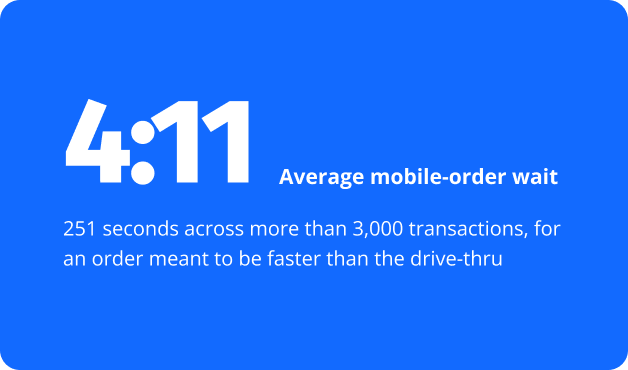
average wait for mobile guests across 3,000+ transactions.
49
post-peak drive-offs, more than pre-peak and peak, combined.
The Problem
Guests Don’t Experience Service Time. They Experience the Whole Visit.
QSR operators have spent years optimizing the part of the drive-thru they can measure: menu board to pickup window. Speed-of-service benchmarks, staffing models and performance scorecards are all built around it. The problem is that this window doesn’t capture the whole visit.
The 25th Annual Intouch Insight Drive-Thru Study found that in 2025 the average guest spent 5 minutes and 35 seconds in the drive-thru. Service time accounted for roughly three-quarters of that. The rest happened before the guest reached the order point — and it never showed up in the data.
If tracking stops at the order point, operators aren’t just missing a data point. They’re missing a real part of what shaped that guest’s experience.
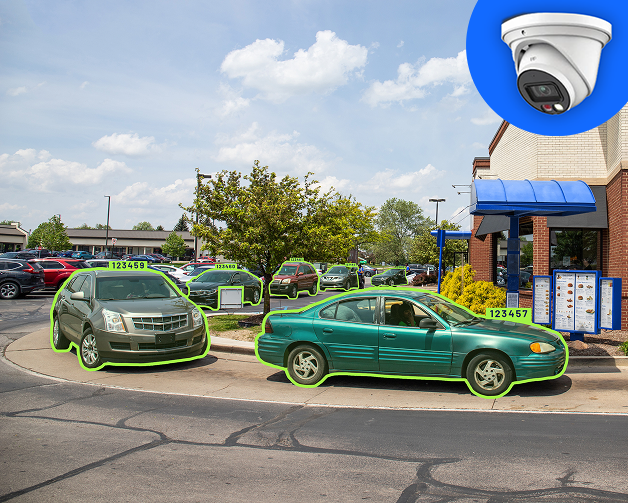
Blind Spot: The Wait Before the Order
A Slow Start Ripples Through Every Stage After It.
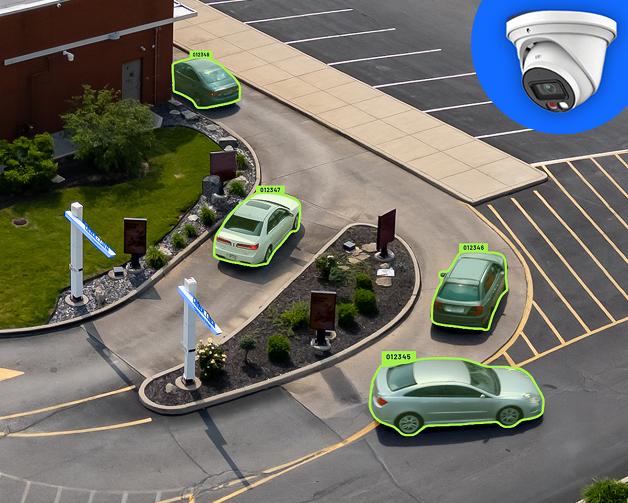
In an HME field test across multiple drive-thru locations, operators tracked guest wait time from lane entry rather than from the menu board alone. Guests were waiting 25 seconds longer than anyone had recorded.
Delays don’t stay where they happen. A slow pre-order period tightens the pickup window and puts pressure on every stage after it. A lane can look efficient on a service-time report while still losing guests to a start no one had visibility into.
Blind Spot: The Wait After the Window
The Timer Stops. The Guest’s Wait Doesn’t.
Pull-forward keeps lanes moving on paper: a car pulls into a spot to wait for its order while the next guest takes its place at the window.
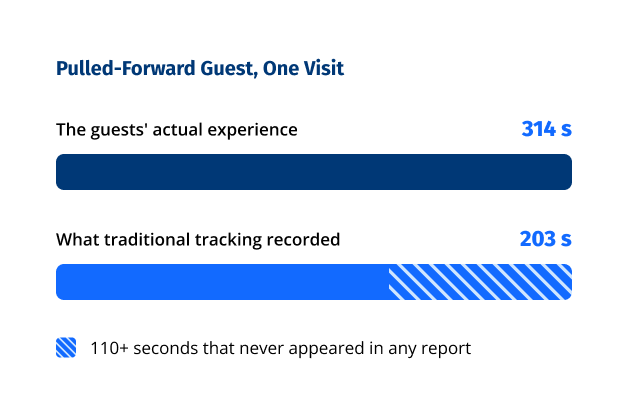
In the same test, pulled-forward guests waited 314 seconds in total. Traditional tracking captured only 203 of them — a gap of more than 110 seconds that never appeared in any report. The guest experienced every one.
Blind Spot: The Wait No One's Watching
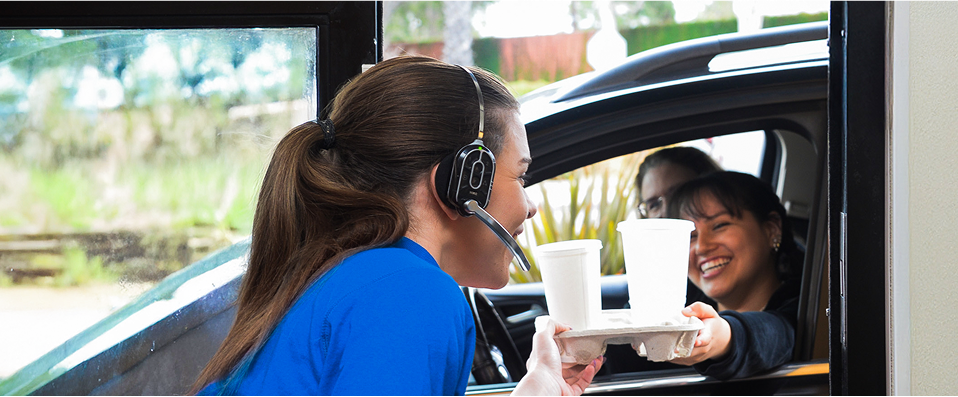
Mobile Guests Ordered Ahead to Skip the Line.
Mobile guests choose to order ahead because they want to skip the wait entirely, not trade one line for another.
Instead, they're waiting an average of 251 seconds, over four minutes for an order meant to be faster than the drive-thru. That's often a staffing problem more than a tracking one: mobile fulfillment needs a dedicated point of ownership.
What Full Visibility Reveals
“Guests Are Leaving” Becomes a Problem You Can Fix.
Drive-offs tell the same story. Staffing built around peak volume can leave the lane thin right when guest patience is lowest.
None of this shows up in a daily average. Touchpoint-level data turns a vague problem into a specific one: a staffing gap in a specific daypart, a queue that needs an owner, a pattern worth catching before it repeats.
The Business Case
What Full-Journey Visibility Drives.
Speed alone has never told the whole story. Full-journey visibility lets operators manage all of it — not just the part that’s easiest to time.
More Throughput
Operators can fix the actual source of a delay instead of guessing.
Better Labor Efficiency
Staffing follows real wait data instead of even distribution.
A Stronger Guest Experience
Fewer drive-offs and shorter hidden waits add up to a visit that feels as fast as it is.
More Confident Decisions
Every staffing or workflow change is backed by evidence instead of instinct.
Visibility That Becomes Intelligence.
Bring understanding into the moments when teams can still change the result.